Since February 2022, 3D printing has become an integral part of RAVAS. What began as a practical way to bring ideas to life more quickly has now become an established and valuable step in our product development and manufacturing processes.
17 June 2026
Share this article
The biggest advantage? Being able to adapt quickly. Whereas we used to rely on external parties or expensive tooling, we can now do everything in-house. An idea that emerges today is often already on the table as a prototype by tomorrow. That not only speeds up the process, but also makes it more flexible and efficient.
How do we move from an initial idea to a working prototype?
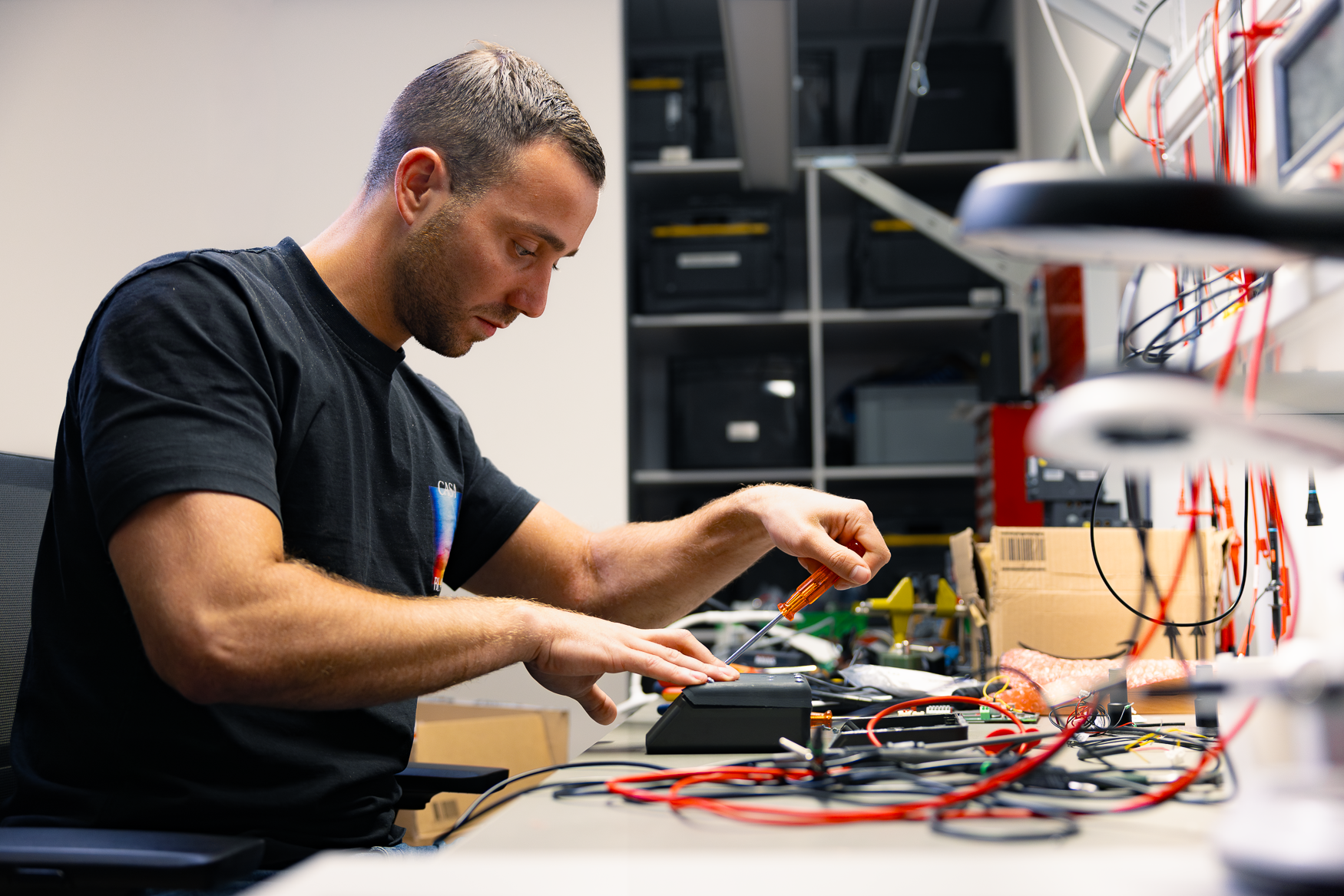
We almost always 3D-print new product ideas first, before investing in things like injection moulds. This allows us to assess straight away whether everything is right, from shape and fit to functionality. Think of housings such as the Display on Handle or parts of the RedBox. By testing early on, we avoid surprises and save time and money at a later stage.
How do we ensure that bespoke parts are right first time?
3D printing plays a key role in customer-specific projects (Engineer-to-Order). For example, if a customer needs a lower fork leg with a non-standard hole pattern or a customised fork pin, we first create a mock-up.
By printing this and fitting it straight away, we can see immediately whether the design works in practice. This provides certainty in advance and prevents unnecessary adjustments later on.
How does 3D printing help us test more effectively and work more efficiently?
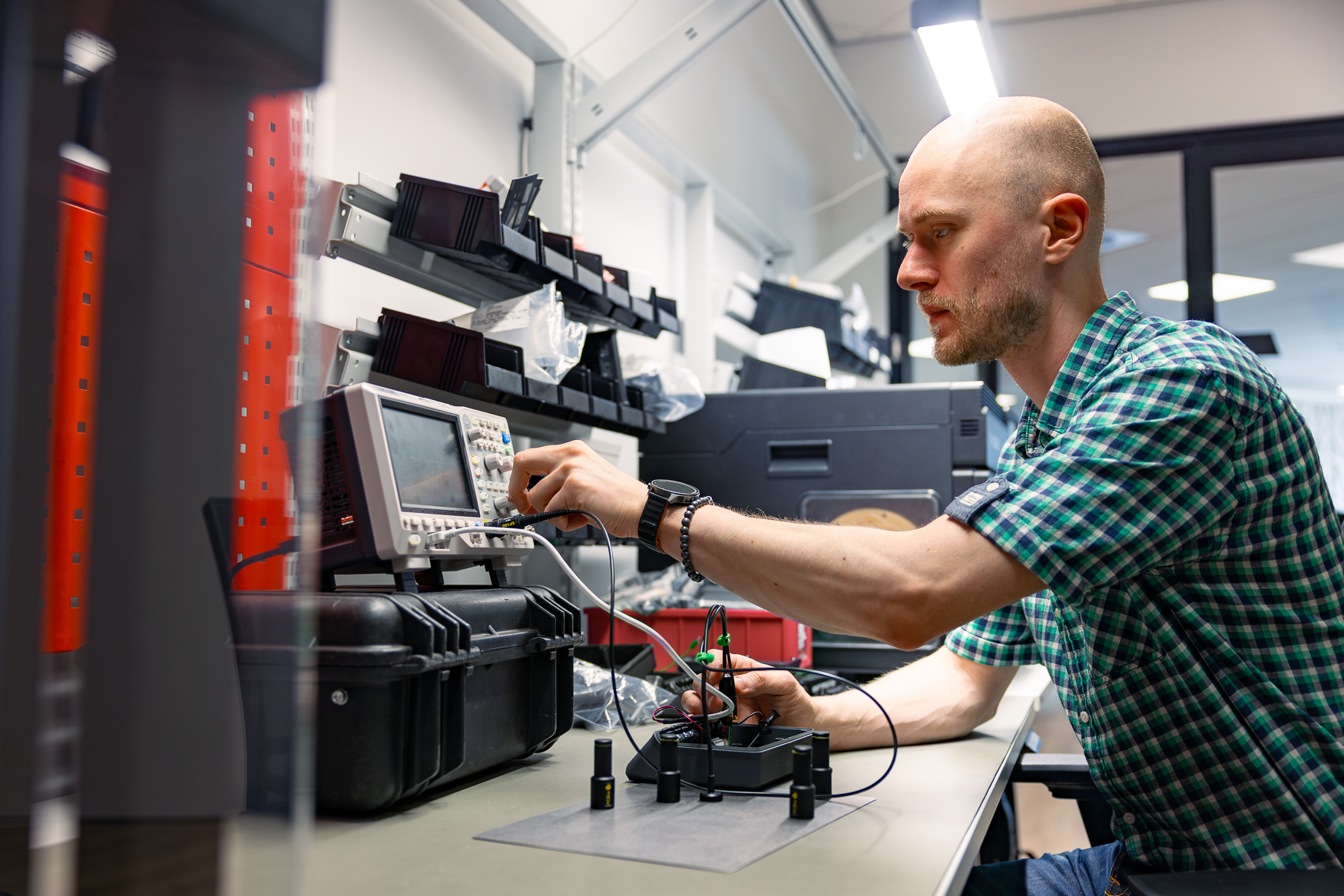
3D printing also helps us work more effectively. We use it to create aids and test set-ups, such as specialised tools or scale models of weighing systems. This enables us to test electronics and embedded software more quickly and efficiently.
When do we use 3D printing for small production runs?
As well as prototyping and tooling, we also use 3D printing for smaller production runs. Sometimes parts are even used directly as end products. This means we are less dependent on lead times and can deliver quickly when necessary.
What technology and materials do we use for 3D printing?
We work with various materials, such as PLA, ABS, ASA, TPE and TPU. Each material has its own properties, depending on the application.
The technology we use is FDM (Fused Deposition Modelling). In this process, an object is built up layer by layer using molten material, until the final part is created.
What are the benefits of 3D printing?
By using in-house 3D printing, we can develop products more quickly, save costs and produce more flexibly. It helps us to work smarter and innovate faster.
Curious to find out what 3D printing could do for your project? We’d be happy to discuss the possibilities with you. Please feel free to get in touch.
The biggest advantage? Being able to adapt quickly. Whereas we used to rely on external parties or expensive tooling, we can now do everything in-house. An idea that emerges today is often already on the table as a prototype by tomorrow. That not only speeds up the process, but also makes it more flexible and efficient.
How do we move from an initial idea to a working prototype?
We almost always 3D-print new product ideas first, before investing in things like injection moulds. This allows us to assess straight away whether everything is right, from shape and fit to functionality. Think of housings such as the Display on Handle or parts of the RedBox. By testing early on, we avoid surprises and save time and money at a later stage.
How do we ensure that bespoke parts are right first time?
3D printing plays a key role in customer-specific projects (Engineer-to-Order). For example, if a customer needs a lower fork leg with a non-standard hole pattern or a customised fork pin, we first create a mock-up.
By printing this and fitting it straight away, we can see immediately whether the design works in practice. This provides certainty in advance and prevents unnecessary adjustments later on.
How does 3D printing help us test more effectively and work more efficiently?
3D printing also helps us work more effectively. We use it to create aids and test set-ups, such as specialised tools or scale models of weighing systems. This enables us to test electronics and embedded software more quickly and efficiently.
When do we use 3D printing for small production runs?
As well as prototyping and tooling, we also use 3D printing for smaller production runs. Sometimes parts are even used directly as end products. This means we are less dependent on lead times and can deliver quickly when necessary.
What technology and materials do we use for 3D printing?
We work with various materials, such as PLA, ABS, ASA, TPE and TPU. Each material has its own properties, depending on the application.
The technology we use is FDM (Fused Deposition Modelling). In this process, an object is built up layer by layer using molten material, until the final part is created.
What are the benefits of 3D printing?
By using in-house 3D printing, we can develop products more quickly, save costs and produce more flexibly. It helps us to work smarter and innovate faster.
Curious to find out what 3D printing could do for your project? We’d be happy to discuss the possibilities with you. Please feel free to get in touch.